 Tourism
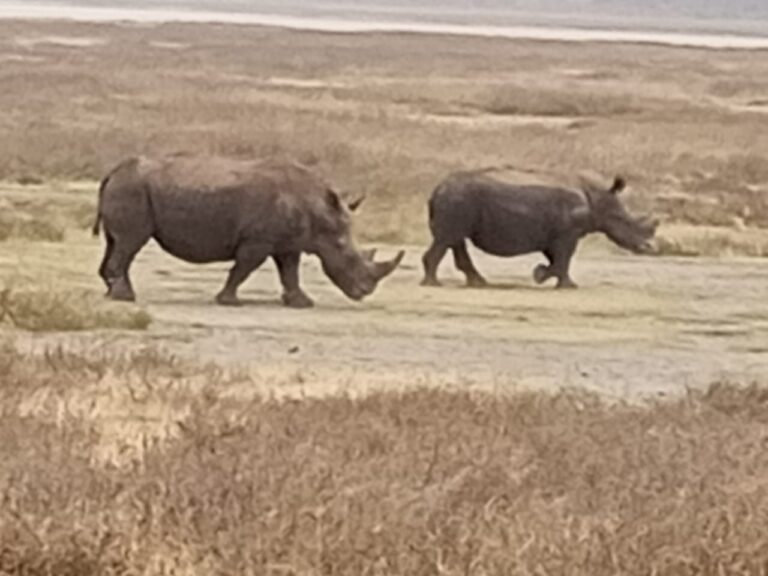
Deep inside Tanzania’s Ngorongoro Conservation Area lies one of the most extraordinary natural habitats on earth — the Ngorongoro Crater. This massive volcanic caldera, roughly 20 kilometres across and 600 metres deep, is home to an estimated 25,000 large animals, including some of Africa’s last remaining black rhinos. Seeing two of them grazing peacefully on the crater floor, as our guests did on this safari, is an experience that fewer and fewer travellers get to have.
Black rhinos are critically endangered, with fewer than 5,500 remaining in the wild across all of Africa. Poaching for their horns, which are falsely believed to have medicinal properties in some cultures, has devastated their populations over the past century. The Ngorongoro Crater provides a natural fortress — its steep walls and limited access points make it easier for rangers to monitor and protect the rhinos that live here.
The crater’s enclosed ecosystem also provides everything rhinos need: fresh water from springs and a small lake, abundant grazing on the crater floor, and relatively few territorial disputes with other rhino populations. It’s one of the most reliable places in East Africa to see rhinos in their natural habitat.
The Ngorongoro Crater is one of the only places in Africa where you have a realistic chance of seeing all of the Big Five — lion, leopard, rhino, elephant, and buffalo — in a single day. The crater floor is relatively compact, which concentrates the wildlife and makes game viewing exceptionally productive. A typical game drive on the crater floor lasts about six hours, and in that time, most visitors will see lions, buffalo, elephants, hippos, hyenas, zebras, wildebeest, and flamingos — with rhinos as the coveted bonus sighting.
The descent into the crater begins early in the morning, when the light is soft and the animals are active. Your 4×4 safari vehicle navigates a steep, winding road down to the crater floor, where you’ll spend the day exploring different habitats — from open grasslands and acacia woodland to freshwater springs and the alkaline Lake Magadi, where thousands of flamingos often gather.
Picnic lunches are taken at designated spots on the crater floor, often near hippo pools where you can watch these massive animals wallowing in the shallow water. By mid-afternoon, you ascend back up the crater rim, usually exhausted from a day packed with incredible wildlife encounters.
We include the Ngorongoro Crater in many of our Tanzania safari packages, often combined with the Serengeti for the ultimate East African wildlife experience. Our experienced guides know the best routes and viewing spots on the crater floor to maximise your chances of seeing rhinos and other rare wildlife.
Want to see rhinos in the wild?
Contact Nature Nest Safaris:
Ready to plan your East African adventure? Browse our curated safari experiences:
Trips that match this guide. Every itinerary can be tailored to your dates and budget, and quotes are free.
 Safari PlanningBest Time to Visit East Africa for a Safari: A Month-by-Month Guide for UK & European TravellersRead article →
 TourismKenya Coastal Safari: Malindi, Watamu & Lamu Island Guide for European TravellersRead article →
 TourismBest Time to Visit Bwindi Impenetrable Forest for Gorilla Trekking (2026 Guide)Read article →
Let our expert team craft your perfect safari adventure. Custom itineraries, competitive prices, and unforgettable experiences.
Start Planning Your Safari