 Tourism
Every year, thousands of American travelers research safari car rental in East Africa. The appeal is obvious — the freedom of a road trip through African wilderness, on your own schedule, at your own pace. But here’s what most rental websites won’t tell you: the vast majority of first-time visitors end up choosing a guided safari instead, and they’re glad they did.
This guide gives you the full picture — self-drive rental costs, guided safari costs, the pros and cons of each, and how to decide which option is right for your trip to Uganda, Kenya, or Tanzania in 2026.
Renting a 4×4 safari vehicle in East Africa is surprisingly affordable compared to US rental car prices. Here’s what you’ll pay:
Budget 4×4 (Toyota RAV4 or similar): $50–$70/day. Suitable for paved roads and light gravel. Not recommended for national parks with rough terrain.
Safari-grade 4×4 (Land Cruiser or Safari van): $80–$150/day. Pop-up roof for game viewing, high clearance for park roads. This is the minimum you need for a proper safari.
Premium Land Cruiser with camping gear: $120–$200/day. Includes rooftop tent, cooking equipment, fridge, and recovery gear. Popular with experienced overlanders.
4×4 with driver-guide: $150–$250/day. The driver knows the parks, speaks the local language, and spots wildlife you’d miss. Fuel is usually included.
Additional costs to budget for: fuel ($1.50–$2.00/liter, roughly $6–$8/gallon), insurance excess ($500–$2,000 depending on vehicle), park entry fees ($30–$70/day per person), and a security deposit ($500–$1,500, refundable).
Self-drive advantages: Complete freedom and flexibility, stop whenever and wherever you want, no tipping a guide, potentially cheaper for groups of 4+, and the pure adventure of navigating African roads yourself.
Self-drive challenges: African roads range from excellent tarmac to deeply rutted mud tracks that would terrify most American drivers. Navigation in parks can be confusing — Google Maps doesn’t cover park tracks. You won’t know where the animals are (guides share sightings via radio). If you get stuck, help might be hours away. And driving on the left side of the road (Kenya, Uganda, Tanzania) takes adjustment.
Guided safari advantages: Your guide knows exactly where the lions were spotted that morning. They handle all logistics — park gates, tipping, accommodation check-ins. They speak Swahili, Luganda, or Maa, which matters when you need to ask for directions or negotiate with a park ranger. And you can watch the wildlife instead of watching the road.
The honest recommendation for first-time American visitors: hire a driver-guide. The cost difference is modest ($70–$100/day more than self-drive), and the experience is dramatically better. You’ll see more wildlife, stress less, and have a local expert who becomes your personal safari companion.
Kenya is the easiest country for self-drive in East Africa. The roads to and within the Masai Mara, Amboseli, and Lake Nakuru are well-maintained, and there are plenty of rental companies in Nairobi. Park gates are straightforward, and mobile data coverage is good for navigation. If you’re going to self-drive anywhere in East Africa, Kenya is the place.
Uganda is manageable but more challenging. The drive from Kampala to Queen Elizabeth National Park (5–6 hours) and Bwindi Impenetrable Forest (8–10 hours) involves long stretches of rural road. Within the parks, a 4×4 with high clearance is essential. Uganda rewards the adventurous self-driver with uncrowded parks and stunning landscapes.
Tanzania is the most difficult for self-drive. The Serengeti is remote — 8+ hours from Arusha on rough roads — and park regulations are stricter. Most rental companies in Tanzania strongly recommend taking a driver, and some parks require a registered guide. For Tanzania, a guided safari is almost always the better choice.
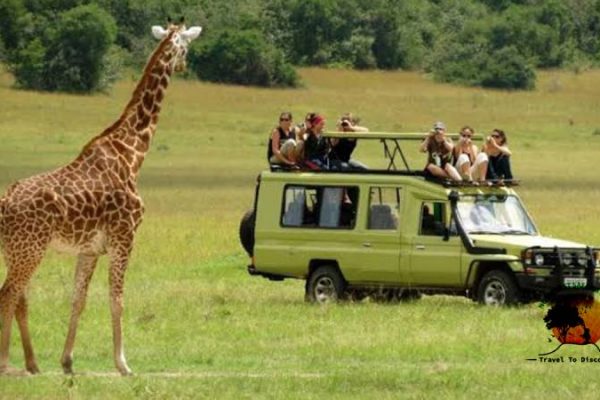
The classic African safari vehicle is a Toyota Land Cruiser with a pop-up roof. The pop-up is essential — it lets you stand up through the roof for 360-degree wildlife viewing and photography. Without it, you’re watching animals through a car window, which is a completely different (and inferior) experience.
Safari vans (Toyota HiAce with a pop-up roof) are cheaper but less comfortable on rough roads. They’re fine for paved-road parks like Lake Nakuru but struggle in the Serengeti or Bwindi.
For American travelers used to driving large SUVs, a Land Cruiser will feel familiar in size but different in handling. These are true off-road vehicles with low-range gearing, and you may need to use it on steep park tracks.
Your US auto insurance and most credit card rental coverage do not apply in East Africa. You’ll need to purchase local insurance through the rental company. Basic coverage is usually included in the daily rate, but the excess (deductible) can be $1,000–$2,000. Consider purchasing the “super CDW” to reduce or eliminate the excess — it typically costs $15–$25/day.
Essential safety tips: always carry a spare tire (two is better), a jerrycan of extra fuel, a basic tool kit, and a charged phone with local SIM card. Drive during daylight hours only — animals on the road at night are a real danger. And never leave your vehicle in the presence of large wildlife.
Rather than booking a rental car and figuring out parks, lodges, and logistics separately, the most efficient approach for American travelers is to book a complete safari package that includes the vehicle, driver-guide, accommodation, park fees, and meals.
A 7-day guided safari in Uganda costs $2,500–$4,500 per person all-inclusive. That’s comparable to what you’d spend on car rental + fuel + parks + accommodation + meals if you did it yourself — but without any of the logistical headaches.
If you still want to self-drive, Nature Nest Safaris can arrange a 4×4 rental with camping gear, provide a detailed route plan with GPS waypoints, pre-book your park entries and accommodation, and offer 24/7 phone support in case you get stuck or need help.
Whether you want a self-drive 4×4 or a fully guided safari with a private Land Cruiser and expert driver-guide, Nature Nest Safaris has you covered across Uganda, Kenya, Tanzania, and Rwanda.
Email us at book@naturenestsafaris.com or call/WhatsApp +256 777 131 912 for a free, no-obligation quote. Tell us your dates, group size, and whether you prefer self-drive or guided — we’ll send you options within 24 hours, all priced in USD with no hidden fees.
Ready to plan your East African adventure? Browse our curated safari experiences:
Trips that match this guide. Every itinerary can be tailored to your dates and budget, and quotes are free.
 6 days · Kenya6 Days Amboseli & Masai Mara SafariFrom ,100 pp · View itinerary →
 5 days · Kenya5 Days Mt Kenya SafariFrom
  Safari PlanningBest Time to Visit East Africa for a Safari: A Month-by-Month Guide for UK & European TravellersRead article →
 TourismKenya Coastal Safari: Malindi, Watamu & Lamu Island Guide for European TravellersRead article →
 TourismBest Time to Visit Bwindi Impenetrable Forest for Gorilla Trekking (2026 Guide)Read article →
Let our expert team craft your perfect safari adventure. Custom itineraries, competitive prices, and unforgettable experiences.
Start Planning Your Safari